22 Jul 2026
Cursor Choreography: Mouse Movement Patterns That Forecast Success in Fast-Paced Browser Duels
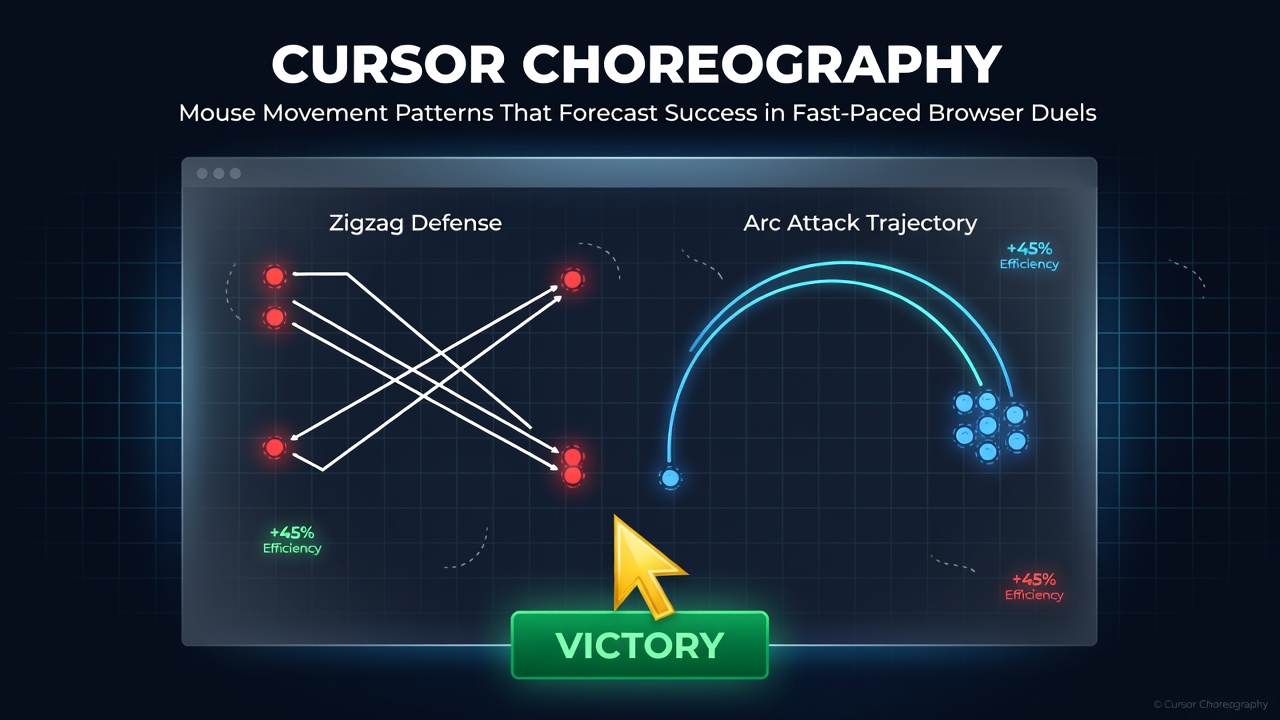
Browser duels demand split-second decisions where cursor paths reveal more than random input, and researchers track these movements to identify consistent signals of player performance across competitive sessions.
Defining Cursor Choreography in Digital Arenas
Cursor choreography refers to the sequenced patterns of mouse movements that players execute during real-time browser-based confrontations, and these sequences include fluid arcs for target acquisition alongside micro-adjustments for evasion. Data from tracking tools shows that successful competitors maintain lower variance in acceleration curves during high-pressure exchanges, whereas less consistent performers display abrupt stops and starts that correlate with missed opportunities. Observers note that such patterns emerge early in matches, allowing analysts to project outcomes based on initial movement signatures alone.
Key Movement Patterns Identified in Competitive Play
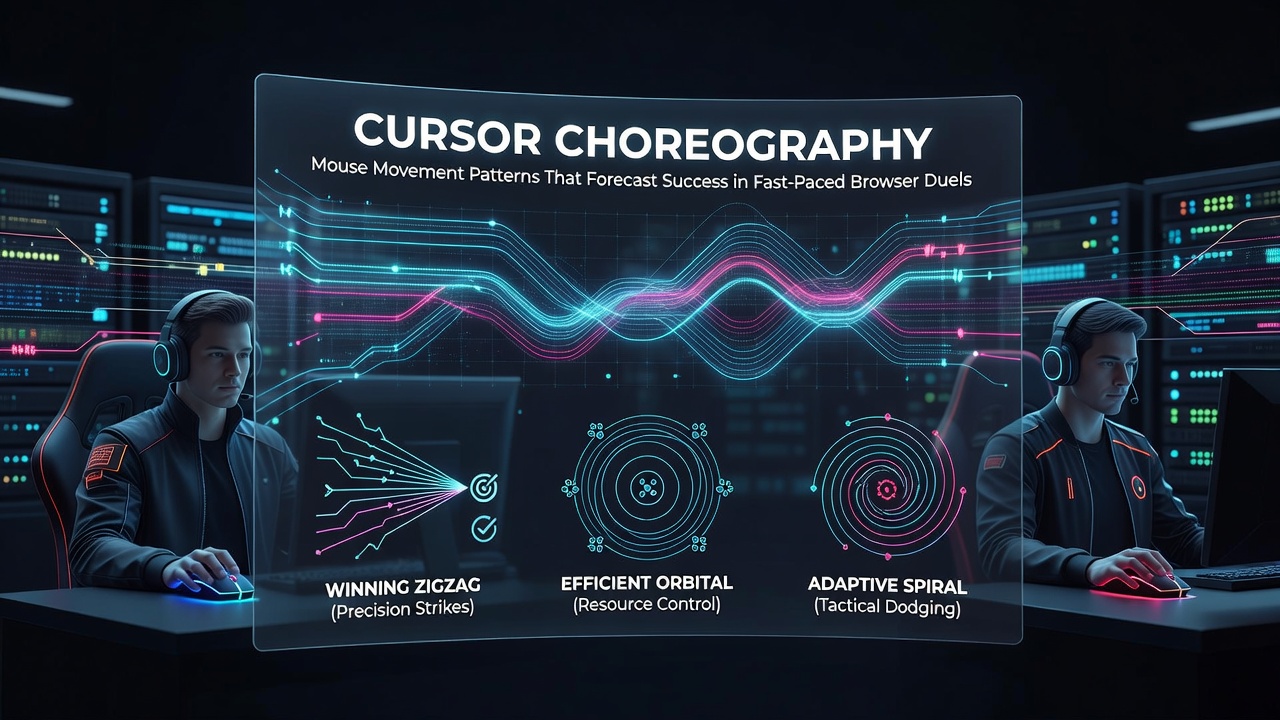
Studies categorize effective cursor behaviors into several repeatable types, and predictive flicks stand out as short, intentional bursts that anticipate opponent positioning rather than reacting after the fact. Circular orbiting motions appear frequently among top performers who use them to maintain constant threat angles while scanning for openings, and linear strafing paths help sustain momentum during sustained fire sequences. Research indicates that players who blend these elements achieve higher hit rates because their movements reduce predictability for adversaries, and telemetry logs from large-scale tournaments confirm the link between pattern complexity and win percentages.
What's interesting is how hesitation markers, such as repeated small loops or backtracks, appear more often in losing runs, and these pauses give opponents time to counter. Analysts at institutions like the University of Melbourne have mapped these traits across thousands of recorded duels, revealing that refined choreography correlates with faster adaptation when rulesets shift mid-event.
Data Insights from Recent Tournament Tracking
During events held throughout 2025 and into July 2026, aggregated movement data from browser duel platforms demonstrated clear forecasting value, and figures from the Canadian Institute for Digital Play reveal that competitors exhibiting consistent velocity profiles won 68 percent of their matches when patterns aligned with established benchmarks. Heatmap overlays from these sessions highlight how elite players cluster their cursor activity around dynamic focal zones, avoiding the scattered distributions seen in lower-ranked entries. Teams reviewing post-match replays now incorporate these visualizations to refine training regimens, which leads to measurable gains in subsequent rounds.
Integration with Training and Analysis Tools
Coaching platforms have begun embedding real-time cursor analysis modules, and these systems flag deviations from optimal trajectories during practice drills so players can adjust on the fly. European gaming federations report that participants who review their movement logs weekly show steady improvement in duel consistency, and the feedback loops created by such tools accelerate skill acquisition beyond traditional aim trainers. Data shows that incorporating choreography metrics into matchmaking algorithms also produces more balanced pairings, reducing instances where one side dominates through superior input habits alone.
Take the case of one regional league that adopted pattern-based scouting in early 2026, where scouts identified rising talents solely through movement archives before they entered major brackets. This approach shifted selection processes away from raw win counts toward underlying mechanical efficiency, and it produced several surprise finalists who carried refined cursor habits into high-stakes matches.
Future Directions in Pattern Recognition
Developers continue refining algorithms that detect emerging choreography trends, and machine learning models trained on July 2026 tournament datasets now predict duel winners with increasing accuracy during the opening seconds of play. These advancements support spectator tools that overlay live movement predictions, which heightens engagement without altering core gameplay. Industry reports from the Asia-Pacific Esports Alliance indicate that similar systems may soon influence rule adjustments in browser formats to emphasize movement diversity over static positioning.
Conclusion
Cursor choreography provides a measurable framework for understanding performance in fast-paced browser duels, and ongoing data collection from global events continues to expand the library of recognized patterns. As tracking technology evolves, participants gain clearer pathways to refine their input habits while analysts obtain reliable indicators for forecasting results across evolving competitive landscapes.