26 Jun 2026
Feedback Loops in Queue: How Post-Game Surveys Influence Teammate Selection Patterns Across Web-Based Competitive Platforms
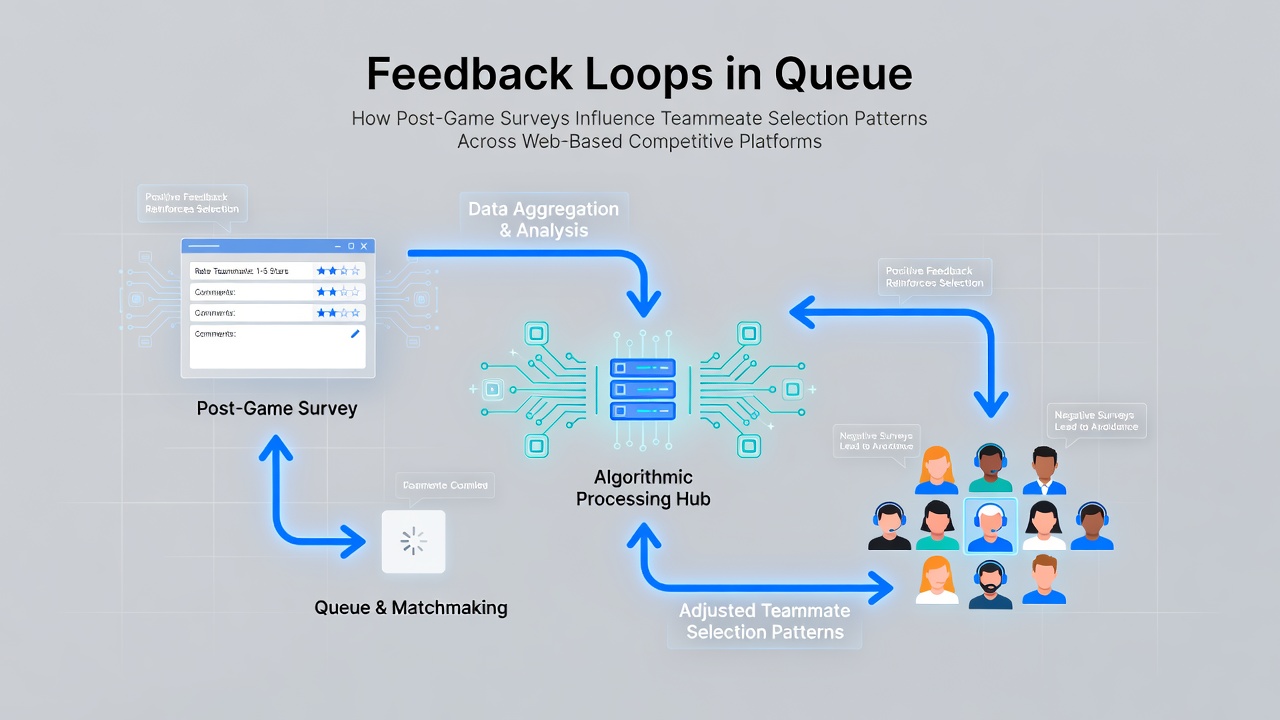
Post-game surveys on web-based competitive platforms collect structured ratings after each match, and these inputs feed directly into matchmaking systems that determine future teammate pairings. Platforms record player evaluations on metrics such as communication, skill alignment, and cooperation, then apply algorithmic adjustments that prioritize or deprioritize certain profiles in subsequent queues. Data collected through June 2026 indicates that repeated high ratings on specific players increase their visibility in selection pools, while lower scores reduce match frequency with the same group.
Survey Structures and Data Collection Methods
Competitive browser platforms deploy post-match forms that ask participants to score teammates on scales from one to five across categories like reliability and strategic fit, and these responses aggregate into profile scores visible only to the system. Developers integrate these scores with performance logs that track win rates and session durations, creating composite metrics that refine queue priorities. Observers note that platforms update these algorithms weekly, incorporating fresh survey batches to adjust eligibility for ranked lobbies.
Survey prompts often include optional text fields for qualitative notes, yet quantitative ratings drive the majority of algorithmic decisions because they scale across thousands of daily matches. Researchers at the University of Toronto have documented how platforms weight recent surveys more heavily than older ones, which accelerates shifts in teammate availability within a single competitive season.
Algorithmic Responses to Aggregated Ratings
Matchmaking engines process survey data through weighted models that elevate players with consistent positive feedback into preferred teammate lists, and this process creates self-reinforcing cycles where high-rated individuals queue together more often. Systems penalize repeated negative evaluations by expanding search radii or inserting cooldown periods before re-matching occurs. Evidence from platform telemetry reveals that players who receive mixed feedback experience greater variance in queue times, as algorithms balance team compositions to maintain overall session stability.
One documented pattern shows that browser platforms adjust selection probabilities within forty-eight hours of survey submission, and this rapid feedback loop allows quick adaptation to emerging player reputations. Industry reports from the Entertainment Software Association highlight similar mechanisms in multiple web-based titles, where rating thresholds determine access to premium lobbies or practice groups.
Observed Patterns in Teammate Selection Across Platforms
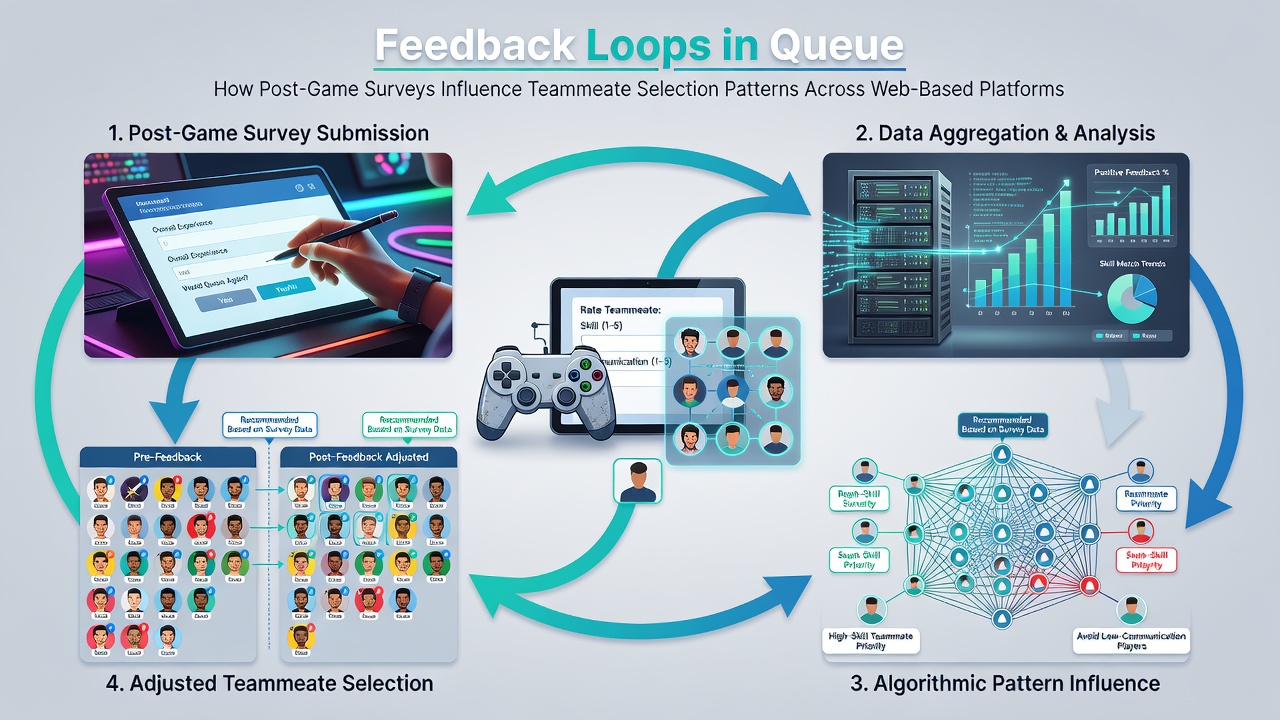
Selection patterns shift noticeably when survey volumes increase during peak hours, because higher data density sharpens algorithmic distinctions between player cohorts. Platforms in June 2026 recorded elevated clustering of similarly rated players in evening queues, while lower-rated profiles dispersed across wider geographic servers to fill gaps. These distributions emerge without explicit player choice, as the system prioritizes composite scores over manual friend requests.
Case examples from several anonymous arena titles demonstrate that players who consistently rate teammates on communication metrics form tighter recurring groups than those focused solely on performance numbers. The resulting networks influence win distribution across brackets, and telemetry logs confirm measurable changes in average match duration when survey-driven pairings dominate the queue.
Platform Variations and Regional Differences
European servers apply stricter data retention policies to survey responses compared with North American counterparts, which alters how long negative ratings persist in selection models. Australian platforms, by contrast, emphasize opt-in survey participation that yields smaller but more consistent datasets, leading to slower yet more stable adjustments in teammate pools. These regional approaches produce distinct selection rhythms, with some systems cycling through broader player pools before repeating pairings.
Cross-platform studies reveal that integration of survey data with live performance metrics produces stronger predictive power for future match outcomes than either source alone. Developers refine these combined models through A/B testing cycles that measure retention rates and queue abandonment statistics after each update.
Conclusion
Post-game surveys on web-based competitive platforms generate measurable feedback loops that reshape teammate selection through algorithmic prioritization of aggregated ratings. Patterns observed through June 2026 show accelerated clustering of high-rated players alongside wider dispersion for those receiving lower evaluations. Continued refinement of these systems depends on the volume and consistency of survey participation across different regions and titles.