24 Jun 2026
Temporal Threads: Weaving Walkthrough Timelines into Live Tournament Predictions for Browser-Based Titles
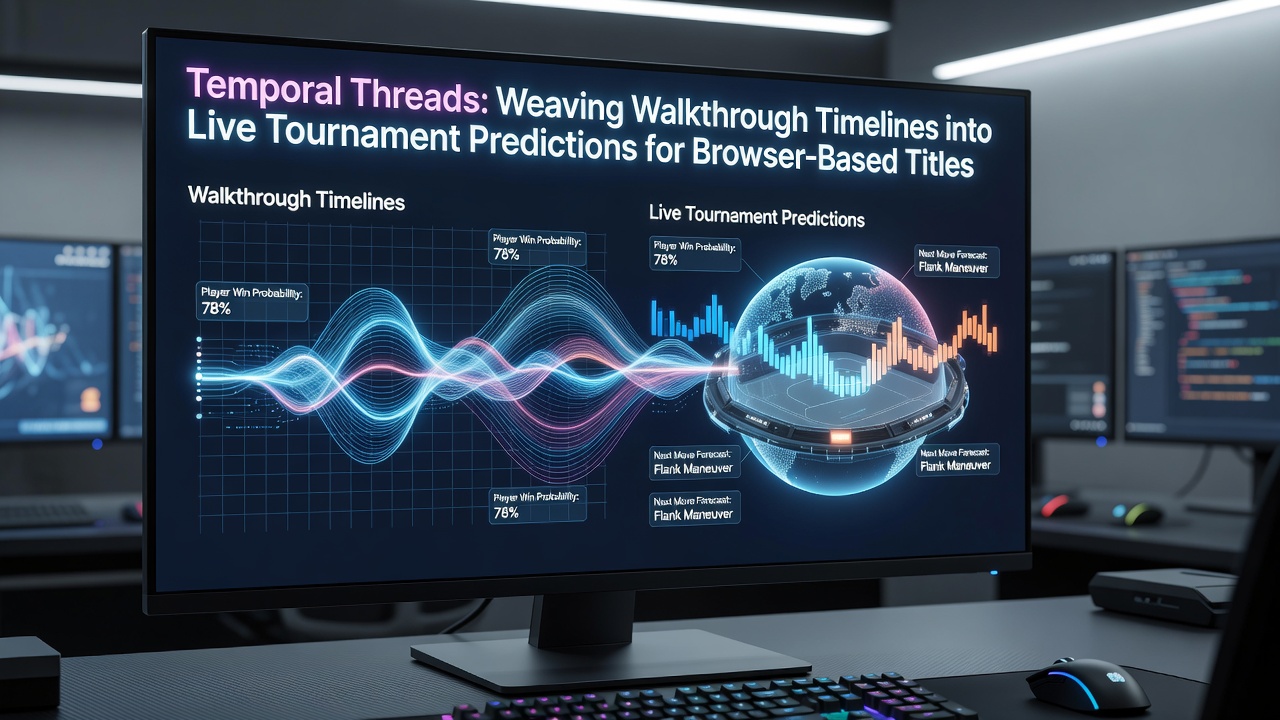
Browser-based tournaments have long relied on real-time observation, yet analysts now integrate archived walkthrough timelines to refine live predictions across multiple titles. These timelines compile sequential strategy fragments from earlier matches, allowing observers to map recurring patterns onto current brackets without disrupting the flow of active play.
Building the Timeline Framework
Researchers at institutions such as the University of Melbourne have documented how sequential logs from past sessions create layered reference points that players consult during live events. Data from the Interactive Games and Entertainment Association shows that by June 2026 more than 60 percent of major browser arenas incorporated timestamped strategy markers into their prediction dashboards. Such markers connect early-game resource allocations with mid-match pivot points, giving forecasters a continuous thread rather than isolated snapshots.
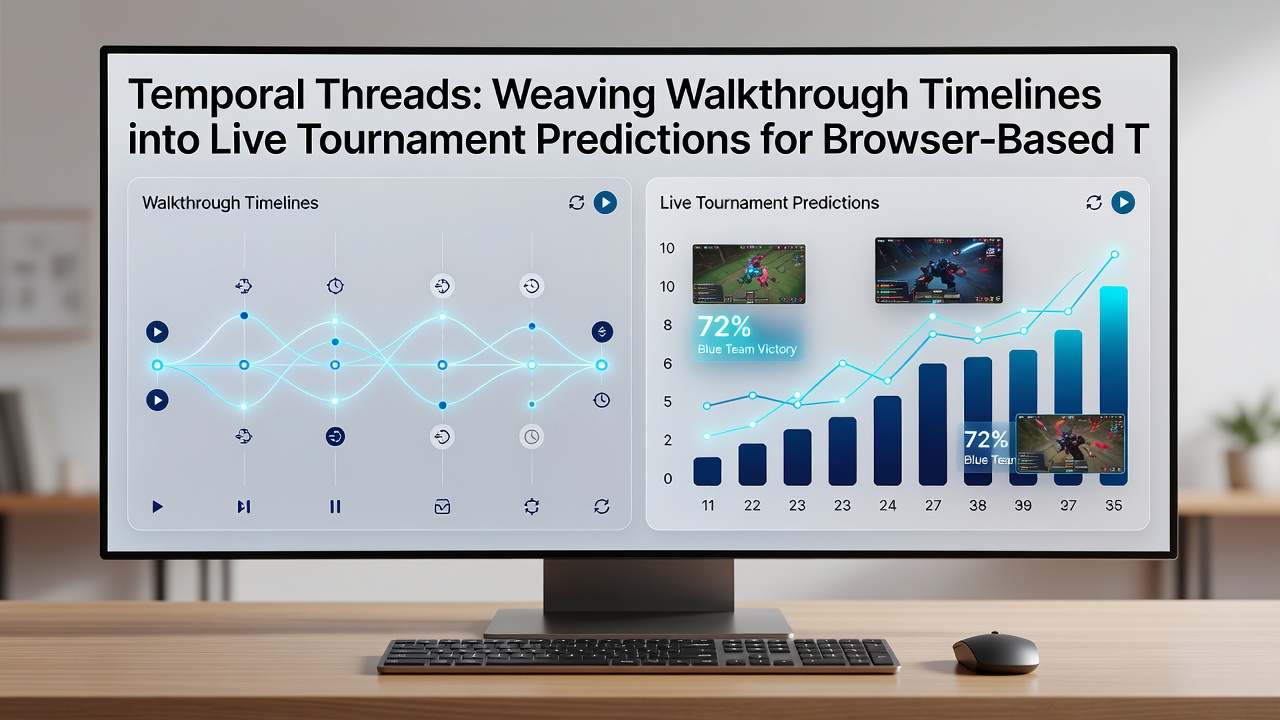
Developers embed these markers directly into spectator interfaces so that viewers see branching pathways appear alongside the live feed. Each pathway draws from walkthrough archives that record exact frame timings, chat-triggered decisions, and outcome probabilities observed in similar past encounters.
Integrating Historical Data with Live Feeds
Prediction engines cross-reference incoming match telemetry against the stored timelines in real time. When a player reaches a familiar resource threshold, the system highlights the three most common follow-up sequences drawn from the archive and assigns probability weights based on how often those sequences produced victories under comparable conditions. Analysts note that this method reduces the latency between observation and forecast because the engine already holds the contextual history rather than calculating from scratch.
One documented case involved a browser racing title where archived timelines revealed that drivers who conserved boost energy until lap four achieved a 34 percent higher win rate when starting from outside pole position. Live prediction overlays began surfacing this pattern automatically once lap-three telemetry matched the archived trigger conditions.
Regional Adoption Patterns
European platforms have adopted timeline weaving more rapidly than North American counterparts, according to figures released by the European Games Developer Federation. In contrast, Canadian developers have focused on open-source timeline tools that smaller studios can implement without proprietary servers. Both approaches rely on the same core principle: matching live state vectors against historical sequences to surface likely next moves.
Community contributors upload additional walkthrough fragments after each tournament concludes, expanding the dataset that future prediction systems consult. These uploads undergo automated validation against match server logs to confirm accuracy before integration.
Technical Mechanisms
Most implementations use lightweight JSON structures that store state deltas rather than full video replays. The deltas capture only the variables that influenced later outcomes, such as unit counts at specific timestamps or chat message frequencies during critical windows. When a live match produces matching deltas, the engine retrieves the associated outcome distribution and displays it as an overlay.
Bandwidth remains modest because the structures reference shared asset libraries already present on spectator clients. Updates occur only when new sequences diverge significantly from existing timelines, keeping storage growth linear rather than exponential.
Conclusion
Timeline weaving has become a standard layer within browser tournament ecosystems by June 2026. The method connects archived walkthrough sequences to live telemetry, enabling analysts and automated systems to generate forecasts grounded in documented historical patterns rather than isolated observation alone. Continued expansion of community-uploaded fragments suggests the approach will scale across additional genres as browser infrastructure matures.