17 Jul 2026
Velocity Vectors: Decoding Movement Patterns from Archived Match Replays in Fast-Paced Digital Arenas
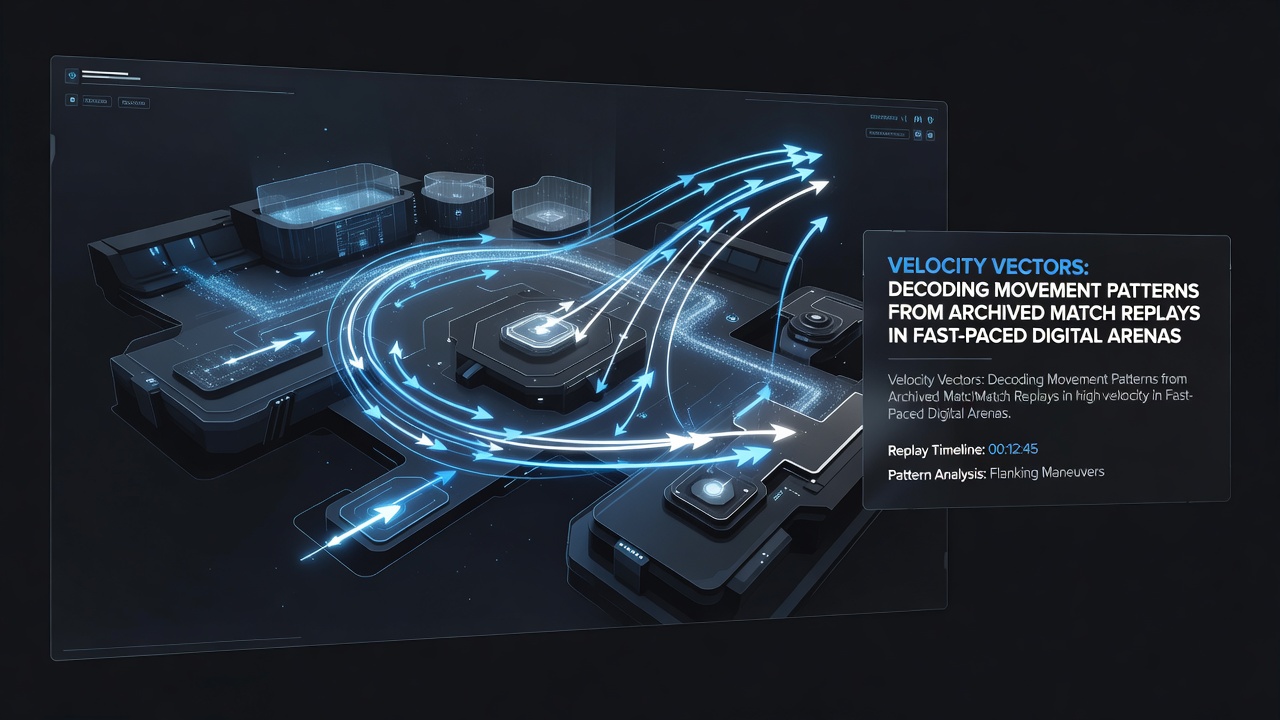 Analysts parse archived match replays by extracting positional data points at regular intervals, converting those coordinates into velocity vectors that capture both speed and directional shifts during gameplay sequences. Teams in fast-paced digital arenas rely on this approach because raw footage alone leaves subtle movement efficiencies hidden, whereas vector calculations highlight accelerations, decelerations, and trajectory adjustments that determine outcomes in split-second exchanges. Software tools process frame-by-frame coordinates from replay files, applying mathematical derivatives to generate vector fields that map how individual players navigate arenas over time. Researchers at institutions such as the University of Waterloo have documented these methods in studies examining competitive titles, noting that vector magnitude indicates sprint bursts while angle changes reveal feints and course corrections. Data from major tournaments held through July 2026 shows increased adoption of such analytics among coaching staffs seeking to refine positioning drills.
Extracting and Processing Replay Data
Replay systems record player coordinates alongside timestamps, allowing extraction routines to compute velocity as the difference in position divided by elapsed time between frames. Engineers calibrate sampling rates to match game engines, ensuring vectors reflect actual in-arena physics rather than interpolation artifacts. Organizations like the Esports Integrity Commission have referenced similar data-handling standards when reviewing match integrity across international circuits.
Once generated, vectors undergo filtering to isolate meaningful segments such as engagement windows or retreat paths. Analysts overlay these on heatmaps, revealing clusters where high-magnitude vectors indicate aggressive pushes contrasted against lower values during cautious rotations. This layered view connects raw movement logs to strategic decisions without requiring live observation.
Identifying Patterns in High-Speed Environments
Velocity vector analysis uncovers recurring signatures in duels, such as consistent deceleration curves before jumps or abrupt direction shifts during evasion sequences. In arena-style competitions, these signatures help differentiate between scripted routes and adaptive responses to opponent pressure. Observers note that teams reviewing July 2026 championship replays identified vector clusters correlating with successful objective captures, providing quantifiable benchmarks for training regimens.
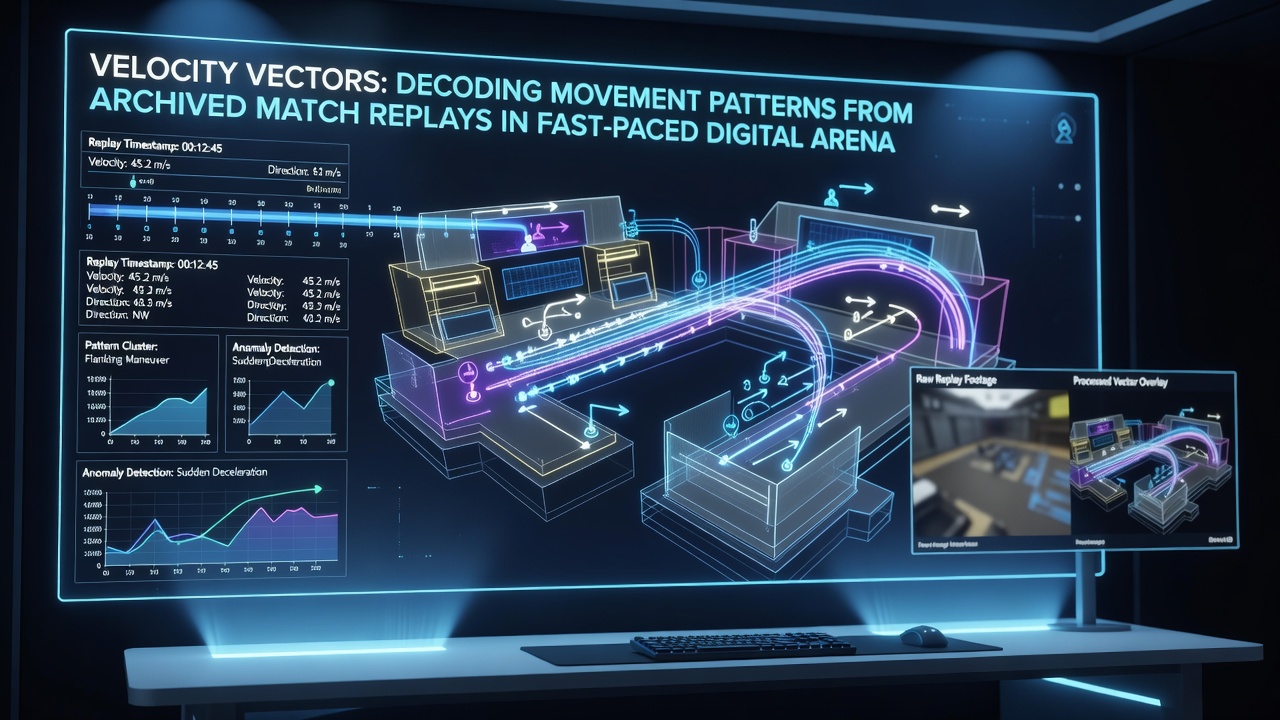
Cross-referencing vectors with event logs further refines insights, linking acceleration spikes to ability activations or environmental interactions. Academic work from Monash University has examined these correlations in multiplayer simulations, demonstrating how vector dispersion metrics predict collision risks in crowded arenas. Such findings support development of predictive models that flag suboptimal paths before they repeat in subsequent matches.
Applications Across Competitive Circuits
Coaching groups integrate velocity data into review sessions, presenting simplified vector diagrams that illustrate path efficiency compared against league averages. Players review their own replays to adjust timing on movement abilities, targeting reductions in unnecessary vector magnitude during repositioning phases. Industry reports from the Asia-Pacific Esports Federation indicate growing infrastructure investments in automated vector processing pipelines ahead of regional qualifiers scheduled for late 2026.
Scouting departments apply the same techniques to opponent analysis, compiling libraries of vector profiles that highlight predictable movement habits. This repository enables preparation of counter-strategies tailored to specific trajectory tendencies observed across archived footage. The approach scales from individual duels to team rotations, offering a unified framework for dissecting performance across varying arena layouts.
Conclusion
Velocity vector decoding from archived replays supplies a precise lens for examining movement dynamics in fast-paced digital arenas, converting positional records into actionable spatial intelligence. Continued refinement of extraction algorithms alongside expanding tournament datasets positions this technique as a standard component of competitive preparation cycles. As July 2026 events conclude and new seasons begin, vector-based review practices continue shaping how participants interpret and optimize in-arena navigation.